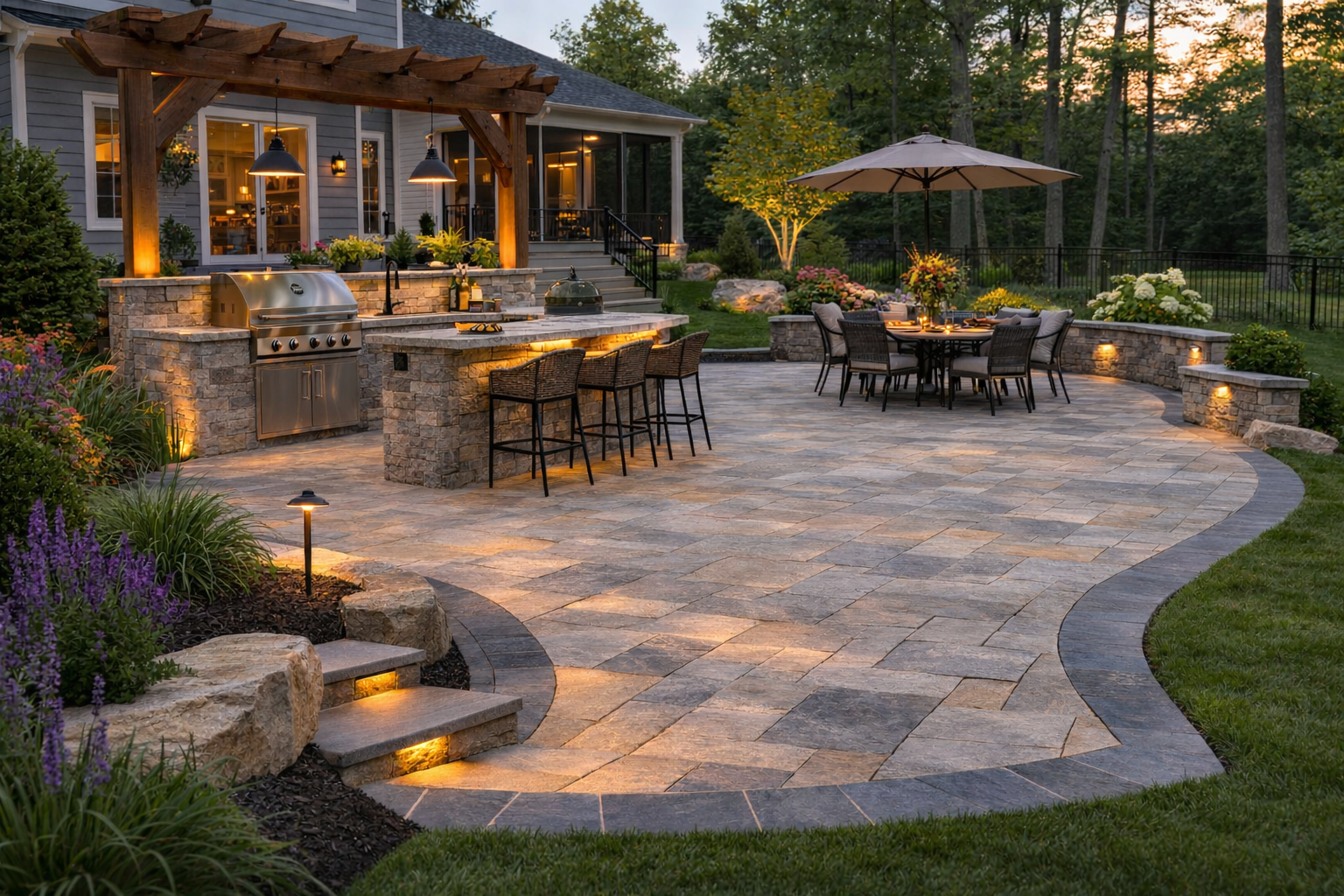
A Richmond homeowner called us last month, frustrated beyond measure. Their three-year-old patio had shifted so badly it had become a tripping hazard. Water pooled in the center after every rain. The pavers — beautiful, premium-quality stones that they'd carefully selected — were cracking at the edges where they'd lifted unevenly.
The pavers weren't the problem. They were top-of-the-line Belgard products that should have lasted decades. So what went wrong?
The answer was invisible. Beneath those expensive pavers was a foundation that was never built to last. The base was too shallow, poorly compacted, and completely inadequate for Central Virginia's demanding climate. That homeowner learned an expensive lesson: in hardscaping, what you can't see matters far more than what you can.
The 80/20 Rule of Hardscaping
Here's a truth that most homeowners never hear until it's too late: approximately 80% of a hardscape's longevity is determined by what lies beneath the surface. The visible pavers, stones, or bricks you spend so much time selecting? They account for only about 20% of the equation.
Think of it like building a house. No one would dream of constructing their dream home on a poorly poured foundation, yet that's essentially what happens when contractors cut corners on hardscape base preparation. The foundation determines everything — how level your surface stays, how well it drains, and ultimately, how long it lasts.
This principle becomes even more critical when you factor in Virginia's climate. Our region experiences something particularly challenging: freeze-thaw cycles. A proper foundation is your only defense.
What Proper Base Preparation Actually Looks Like
When we begin a patio project, the excavation phase takes longer than most homeowners expect. That's intentional. Here's what proper base preparation requires in Central Virginia:
Excavation Depth: 8–10 Inches Minimum
In our region, we excavate to a minimum depth of 8–10 inches below the finished surface. This isn't arbitrary — it accounts for our soil composition, frost line requirements, and the layered base system that creates lasting stability. Contractors who excavate only 4–5 inches are setting up their clients for failure.
Non-Woven Geotextile Fabric
Before a single stone goes down, we line the excavation with non-woven geotextile fabric. This hidden layer does three critical jobs: it adds structural support, promotes proper drainage, and — most importantly — prevents the base aggregate from migrating down into the subsoil over time. That migration is one of the biggest reasons patios settle and develop low spots years after installation.
The fabric must be non-woven (not woven) and weigh between 4 oz and 8 oz per square yard, depending on the application. Seams should be overlapped 12 to 24 inches based on soil conditions — softer, wetter soils require the wider overlap to ensure full separation between the base and the native ground. It's a small detail that adds decades of life to your hardscape.
Compacted Gravel Base: 6 Inches Minimum
The first layer is #57 stone — a clean, angular crushed aggregate that drains exceptionally well and locks together under compaction. This layer must be installed in lifts, meaning we add 3-inch layers at a time and compact each before adding the next. The goal is achieving 95% or greater compaction density. This creates a stable, load-bearing foundation that won't shift or settle.
Sand Setting Bed: 1 Inch, Screeded Level
Above the compacted gravel sits a one-inch layer of concrete sand. This is carefully screeded to create a perfectly level surface for the pavers. The sand allows minor adjustments during installation and helps lock the pavers together after polymeric sand is applied.
Slope for Drainage: ¼ Inch Per Foot
Every patio must slope away from your home's foundation at a rate of approximately ¼ inch per foot. This seems minor, but it's essential. Without proper slope, water pools on your patio, seeps into the base, and accelerates deterioration — especially during freeze-thaw cycles.
How to Know If Your Contractor Does It Right
Before hiring any hardscape contractor, ask these questions about their base preparation process:
- What excavation depth do you use?
Anything less than 8 inches in our region is a red flag. - How do you compact the base?
They should mention plate compactors and achieving specific compaction rates. - Do you install gravel in lifts?
One thick layer of gravel cannot be properly compacted. - What's your drainage plan?
They should discuss slope and how water will move away from structures. - Can you show me examples of your base work?
Quality contractors document their process.
Red flags include contractors who seem rushed to discuss base preparation, who can't explain their process in detail, or who promise unusually fast completion times. Proper base work takes time — there are no shortcuts that don't compromise quality.
At Evergreen, we photograph every stage of base preparation. It's not just documentation — it's accountability. When we hand you the keys to your new outdoor space, you'll have a complete record of what's beneath. We want you to see the work that will make your investment last decades.
The Richmond Climate Factor
Central Virginia presents unique challenges that make proper base preparation even more critical. Our region experiences approximately 30–50 freeze-thaw cycles every year. Here's why that matters:
When water enters the base material and freezes, it expands. This expansion creates upward pressure called frost heave. If your base isn't properly constructed to allow drainage and resist this pressure, the surface above will shift, crack, and become uneven.
What Happens With an Inadequate Base:
- 01. Rain soaks through the paver joints into a shallow, poorly draining base
- 02. Temperatures drop below freezing, and that moisture expands
- 03. The pavers lift unevenly as the frozen ground pushes upward
- 04. When temperatures rise, the pavers settle — but not always back to their original position
- 05. Repeat this 30–50 times per winter, and you have significant damage
A properly constructed base with adequate depth and compaction allows water to drain before it can freeze. The gravel base provides a stable layer that resists frost heave. This is why proper base preparation isn't optional in Virginia — it's essential.
The Cost of Getting It Wrong
We understand the temptation to choose the lowest bid. But consider this: the homeowner we mentioned at the beginning of this article paid approximately $15,000 for their original patio. The cost to tear it out completely and rebuild it correctly? Over $20,000.
A proper foundation adds relatively little to the upfront cost of a project — but it's the difference between a patio that lasts 3 years and one that lasts 30. When you're investing in your outdoor living space, make sure you're investing in what's beneath it.
Foundation Series — Part 1 of 4
This is the first post in our Foundation Series. Coming next: how Virginia's clay soil affects your hardscape and what to do about it.